
Remote sensing monitoring
The operation combines orbital imagery, radar and time series to monitor plots, vegetation vigor, planting, harvest and relevant field changes.
Dashify monitors properties, plots and production cycles with satellites, geospatial AI, geoprocessing and automation. The solution brings forecasting, crop estimates, weather and wildfire alerts, risk management, teams, fleet and notifications into one operation.
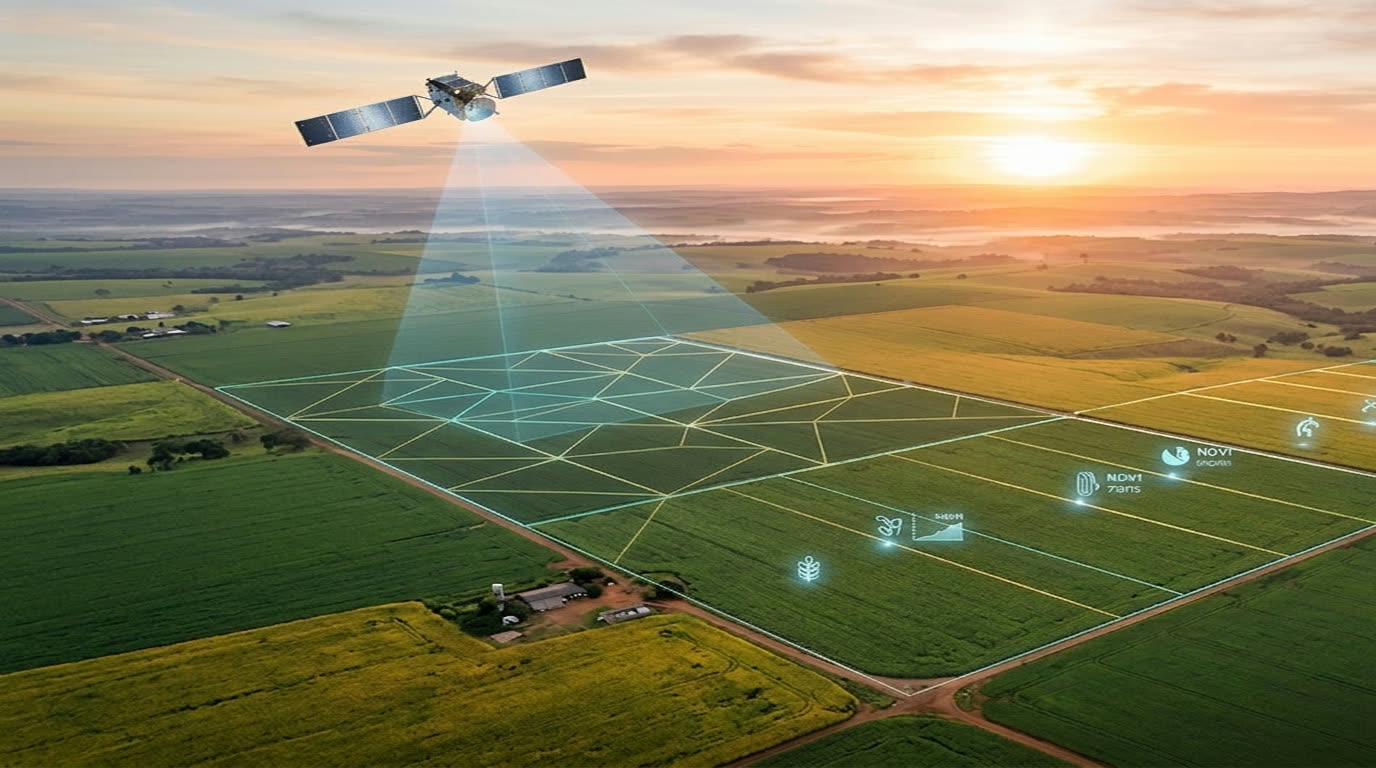
Dashify turns remote sensing, geoprocessing, weather forecasting, production estimates and operational communication into a platform to manage crops, teams, fleet and risk with higher precision.
The operation combines orbital imagery, radar and time series to monitor plots, vegetation vigor, planting, harvest and relevant field changes.
Dashify correlates maps, properties, productive areas, routes, municipalities and internal layers to prioritize regions, crops and critical operations.
Models combine history, agricultural calendar, weather and regional productivity to estimate area, production potential, crop evolution and management windows.
Rain, drought, heat, wildfire, operational-risk and anomaly alerts anticipate situations that require a team response.
Visits, routes, responsibilities, field evidence, vehicles and activities are organized by region or property.
Growers, technicians, managers and teams are engaged through notifications, WhatsApp and dashboards with history, priority and territorial context.
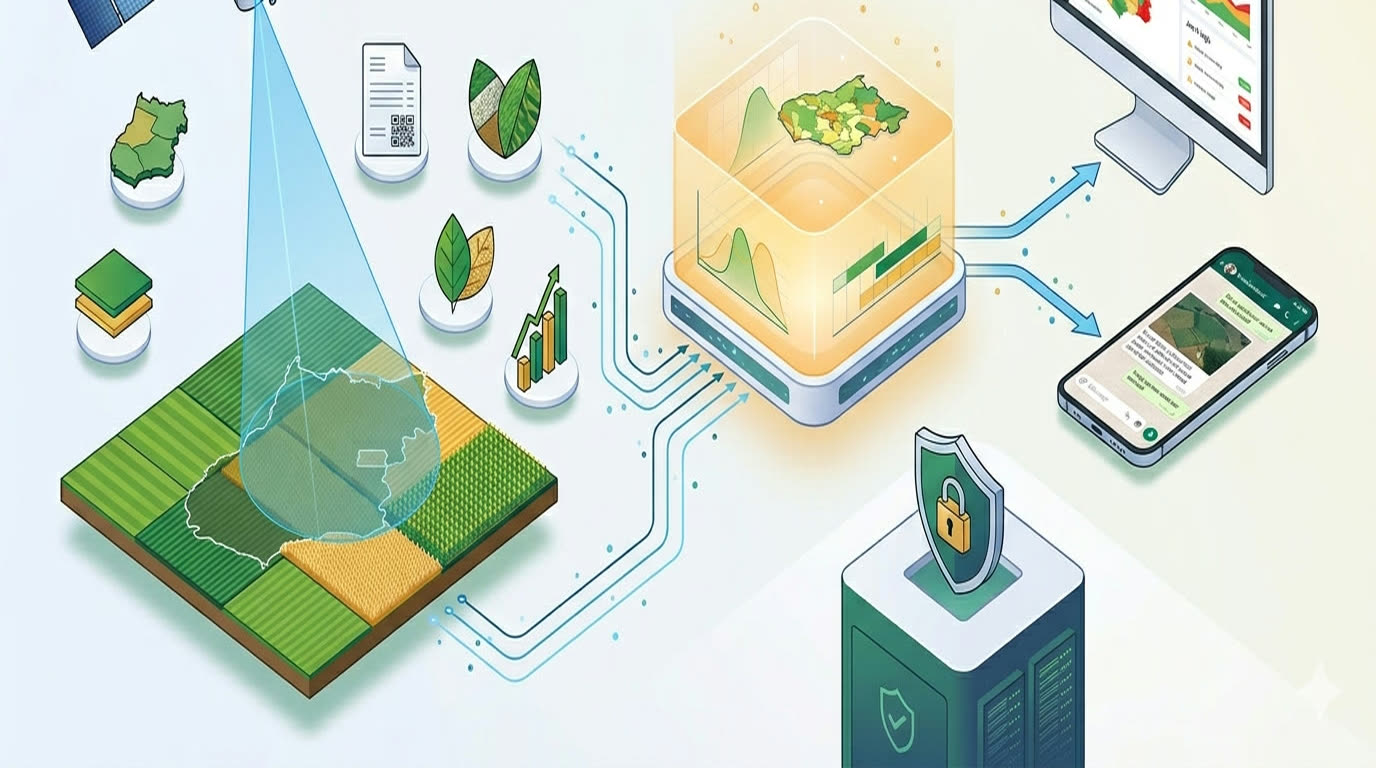
Satellite imagery, weather, rain, heat, wildfire risk, teams and fleet move through the same flow. Geospatial AI correlates everything and delivers dashboards, alerts, notifications and next steps for crop management.
Fields, irrigation, climate, livestock and assets are connected even where cabling, Wi-Fi and cellular plans per sensor are impractical.
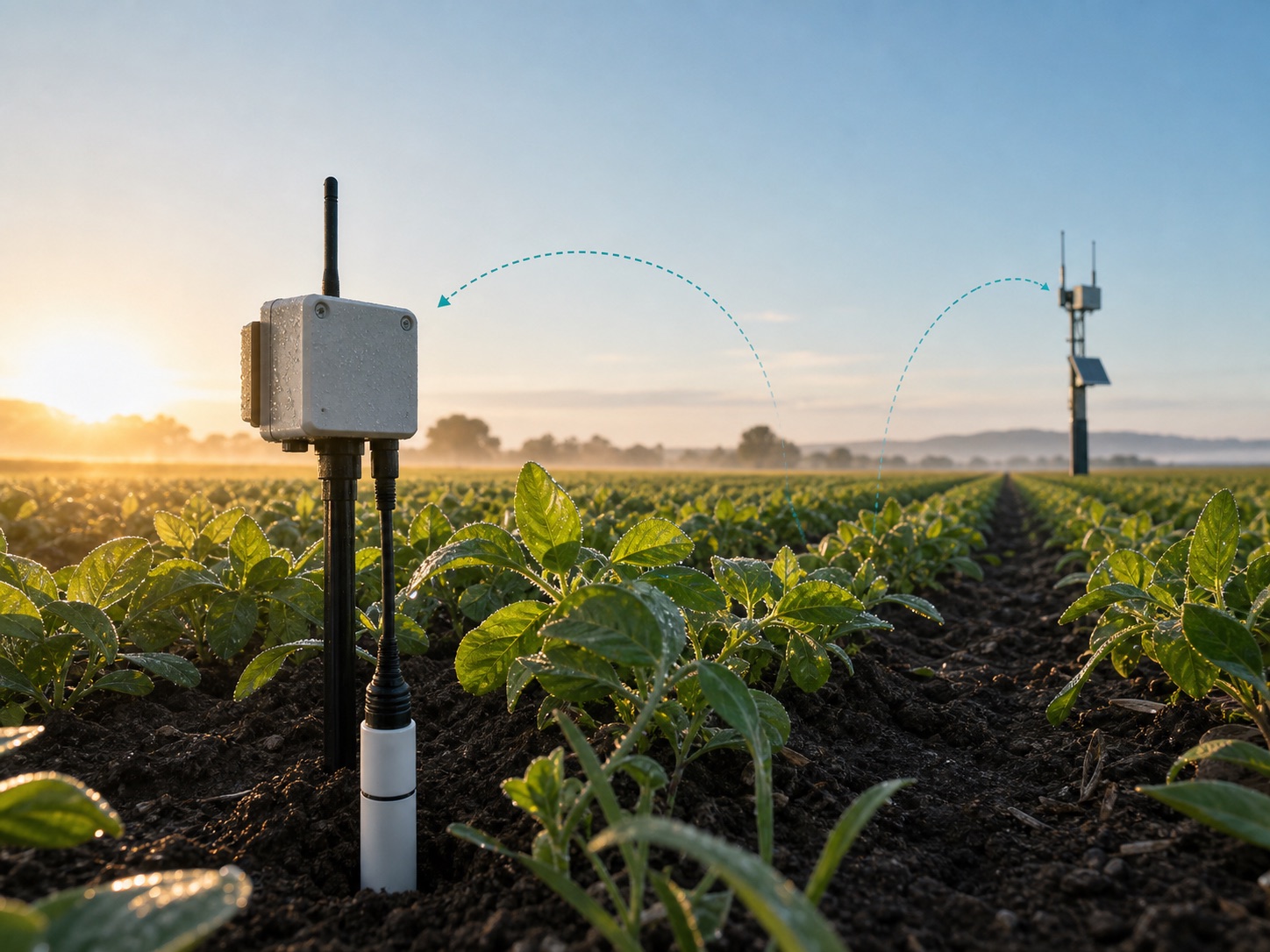
Moisture, temperature, conductivity, rainfall and environmental conditions are compared across fields, greenhouses and crop zones.
Soil, climate, rainfall, CO2 and humidity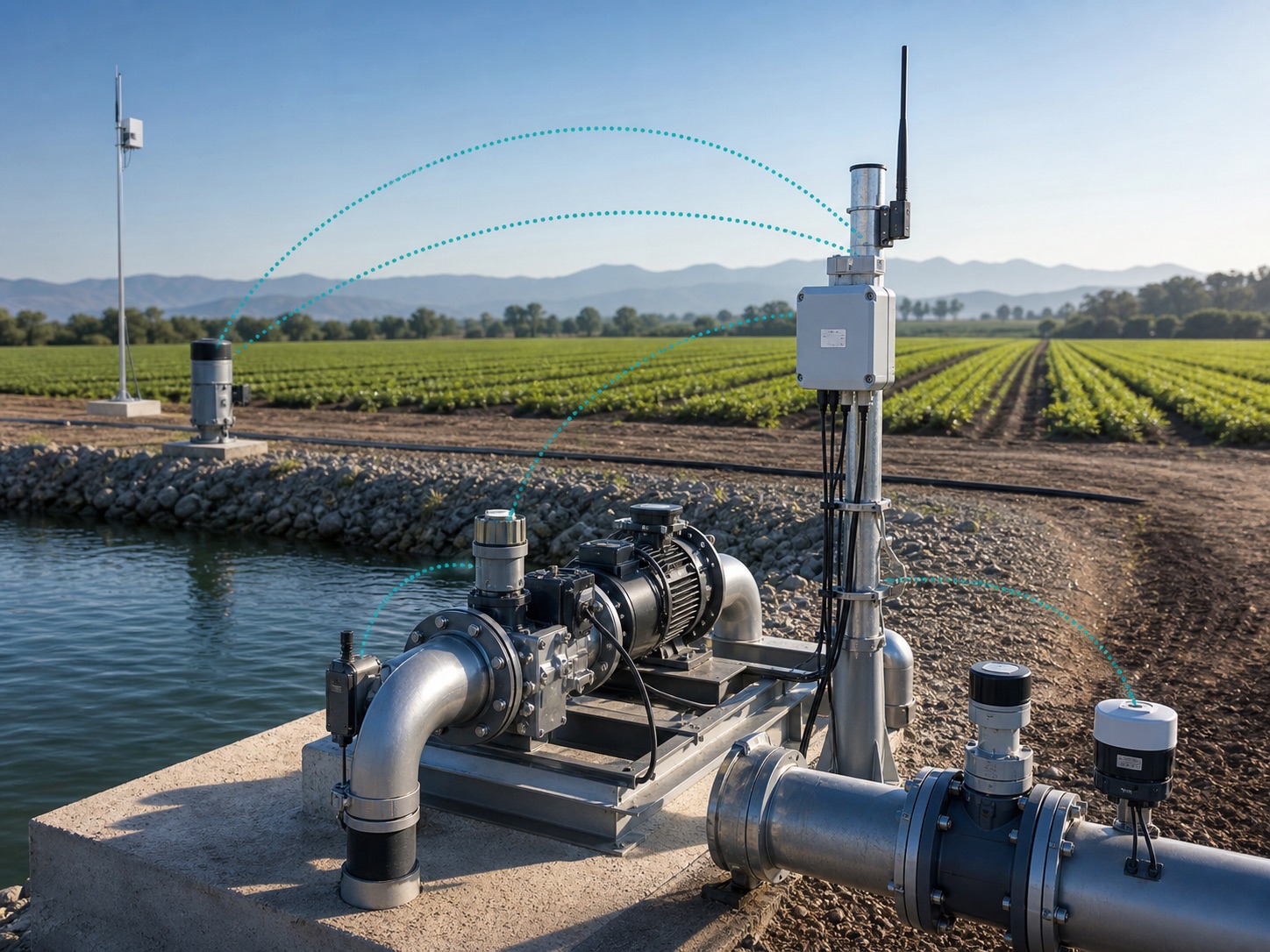
Reservoirs, flow, pressure, pumps and valves are monitored to detect anomalies and guide irrigation.
Level, flow, pressure and pump status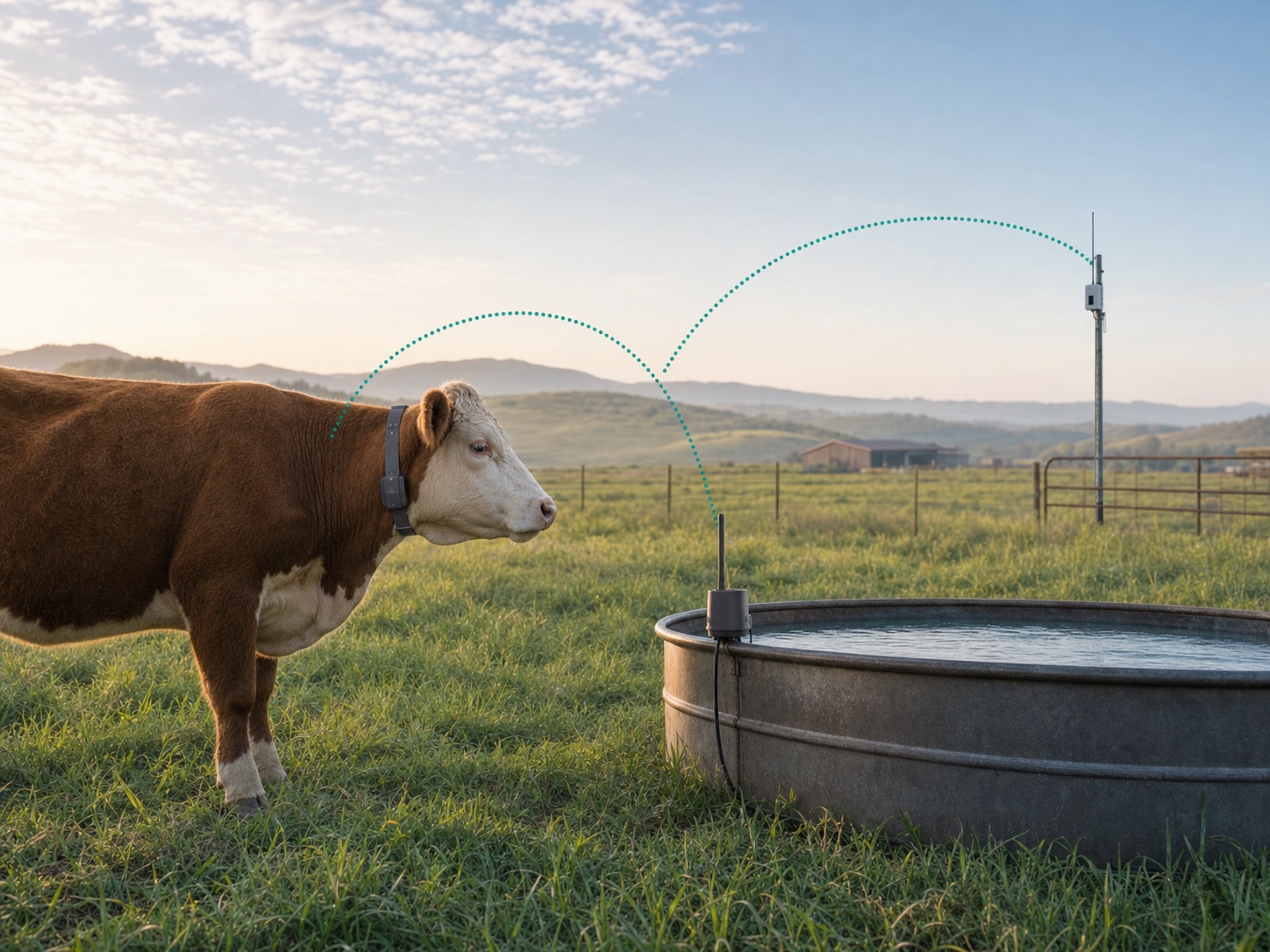
Low-maintenance devices record motion, checkpoints, fences, water troughs and field conditions.
Periodic location, motion and supply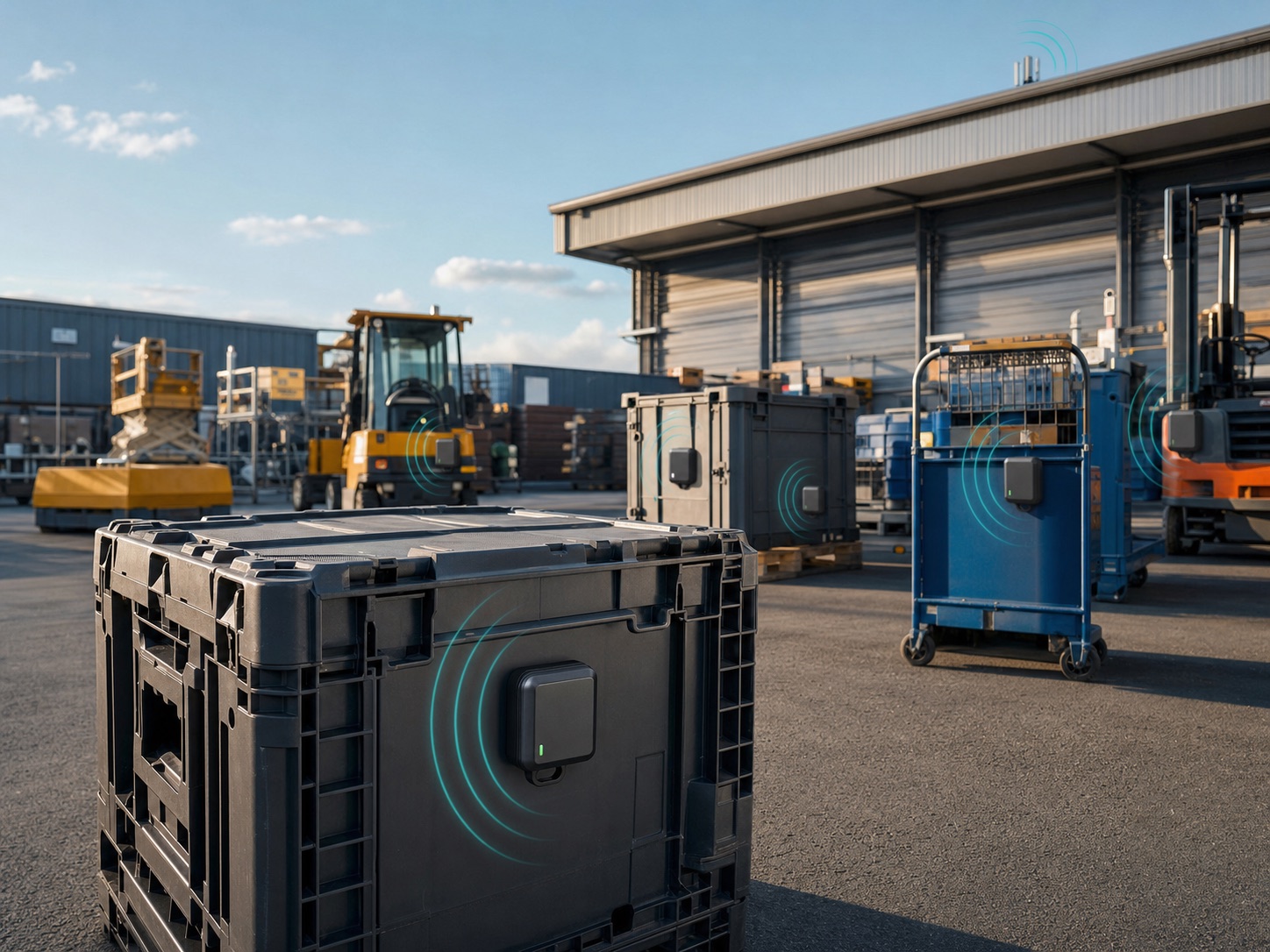
Tools, crates, slow vehicles, equipment and checkpoints receive periodic visibility without continuous streaming.
Motion, checkpoints, location and inventory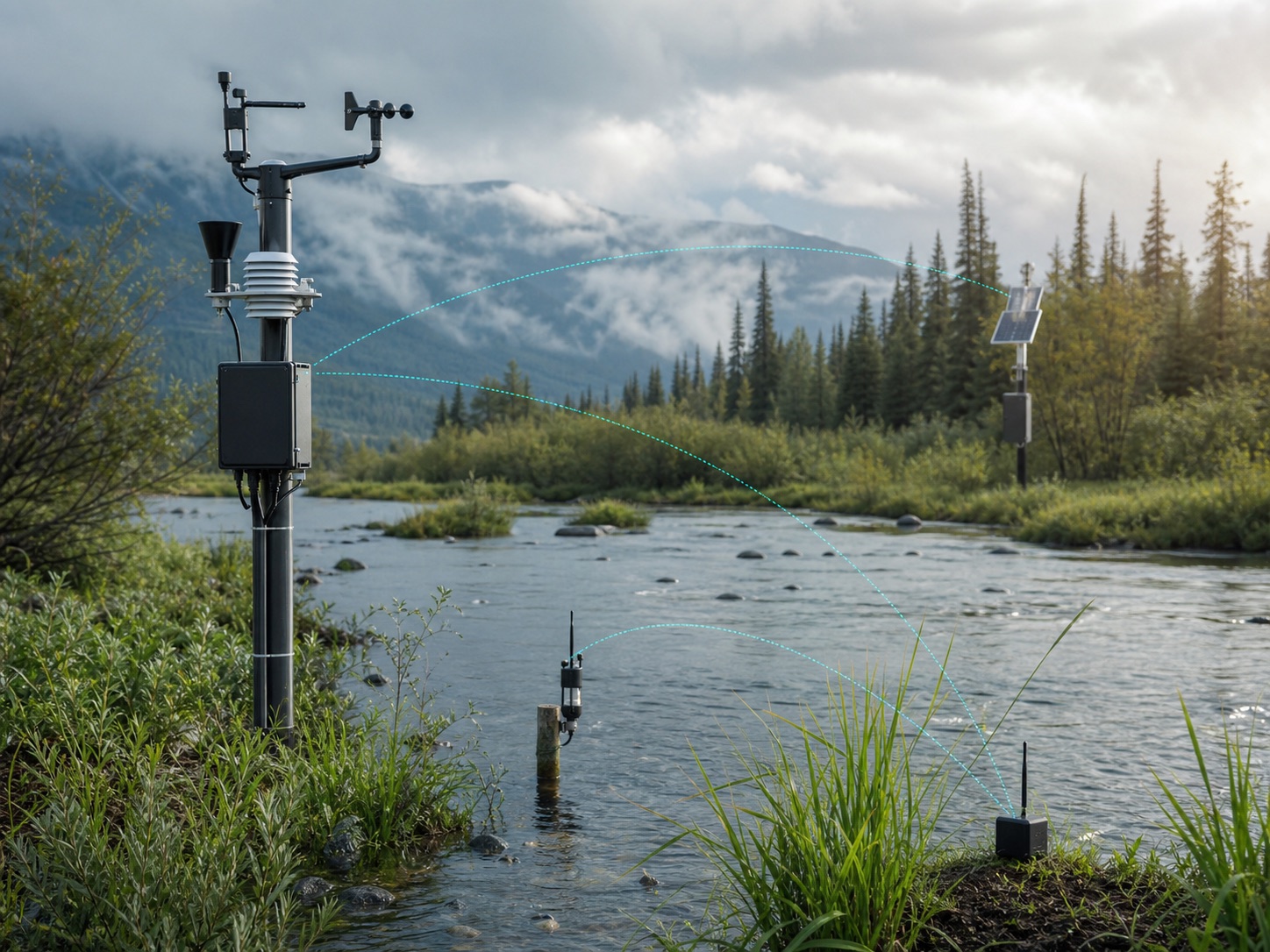
Distributed stations monitor climate, rivers, soil, air, wildfire risk and other environmental conditions across wide territories.
Climate, air, water, risk and trendsDashify turns satellite imagery, maps, forecasts, production estimates and operational communication into digital management for crops, risks, teams and fleet.
The platform maps properties, plots and productive areas with multispectral imagery, radar and time series to track crops, management and operational risk.
NDVI, EVI, NDRE and geographic layers identify planting, vegetation vigor, harvest, anomalies and changes by region.
Production cycles are classified by spectral signatures, confidence, agricultural window, likely crop and technical source for each reading.
Plots, regional productivity, weather, agricultural calendar and history support estimates of area, production potential and crop variations.
Recurring routines monitor rain, drought, heat, wildfire hotspots, anomalies and events that require fast action.
Visits, routes, vehicles, technicians and growers are coordinated with notifications, WhatsApp, history, evidence and operational priority.
The solution combines remote sensing, geoprocessing, weather data, geospatial AI and active communication to reduce manual analysis and accelerate field decisions.
Rural polygons, plots, crops of interest, routes, owners and operational cuts form the initial view of the operation.
The platform correlates imagery, agricultural calendar, weather, time series and internal data to generate readings by production cycle.
Alerts, maps, scores and reports highlight properties, crops, teams and regions that need immediate follow-up.
Dashify sends notifications, records evidence, coordinates teams and fleet, and preserves responses and history for decision making.
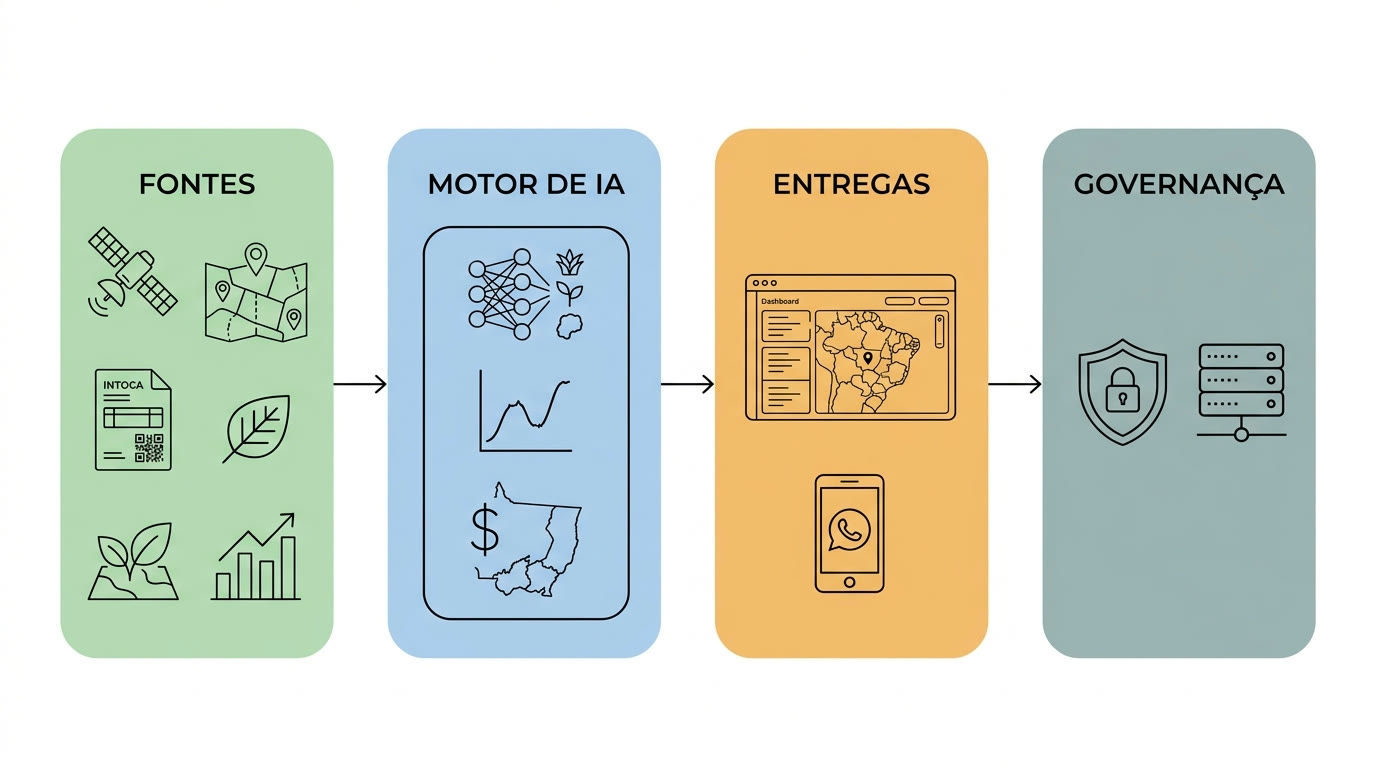
The visual narrative shows how remote sensing, geoprocessing, alerts and notifications support a robust commercial operation for agribusiness.
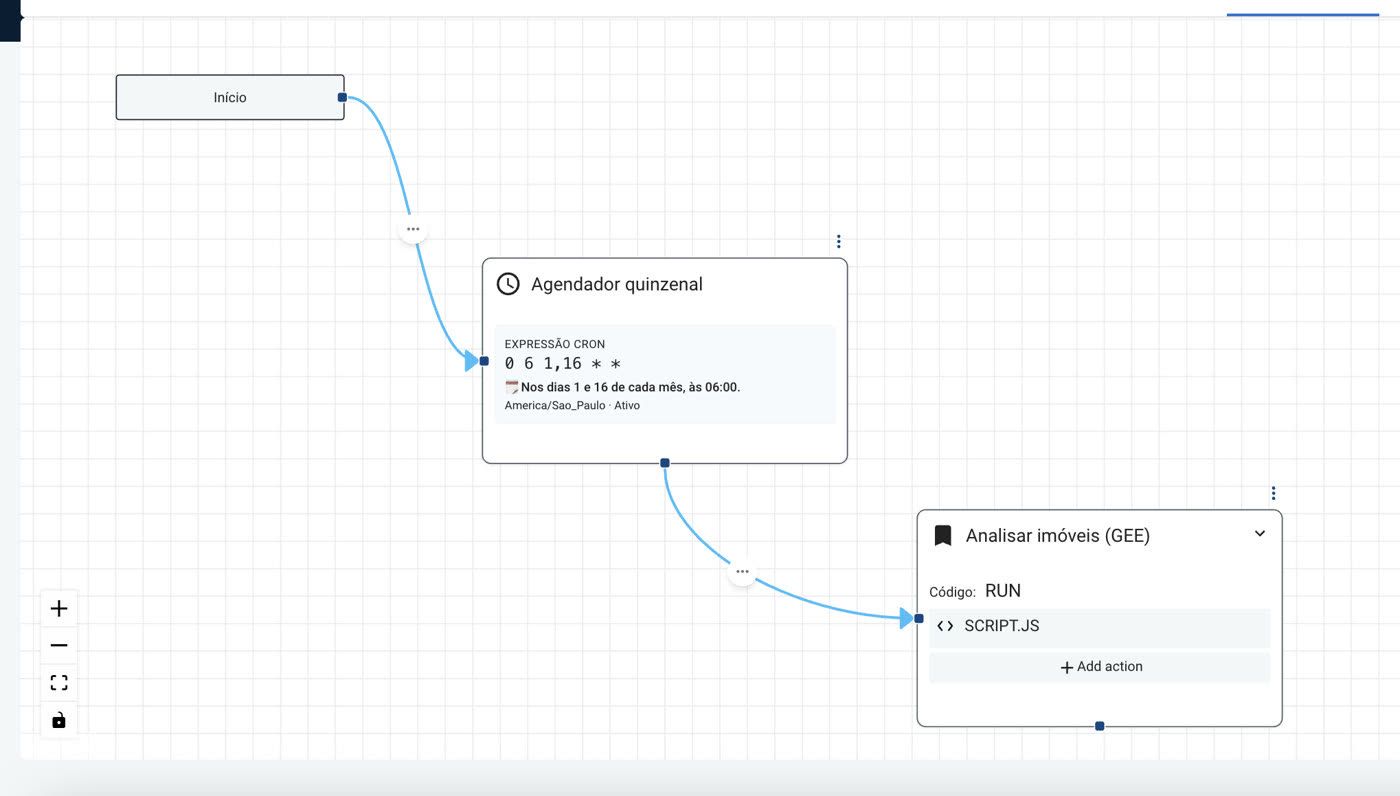
Scheduled routines monitor selected areas, update indicators, estimate production and record events in the timeline.
Dashboards combine map, imagery, plots, likely crop, estimated production, weather, risk and visual explanation in one experience.

Growers, technicians and managers receive maps, summaries, alerts and requests through WhatsApp and notifications with context and history.
The AI layer accelerates queries, summarizes readings, retrieves history and turns geospatial data into actionable answers for agricultural management, field teams, fleet and commercial operations.
Remote sensing, rural polygons, orbital imagery, regional productivity, weather, wildfire data, fleet, history and internal data coexist in the same context.
Natural language queries access authorized data, explain indicators, suggest priorities and help teams navigate the territory.
Each reading preserves crop, source, date, model version, visual evidence, generated alert and executed action to support operational decisions.
Straight answers about how Dashify applies satellites, geoprocessing and AI to forecast, monitor and operate crops.
Remote sensing is the collection of field information from a distance, using satellites, aircraft or drones, without direct contact with the crop. In Dashify, satellite imagery is processed to track vegetation vigor, identify planting gaps, estimate productivity and detect risks such as drought, pests and wildfires.
The platform combines historical image series, vegetation indices, weather data and AI models to estimate planted area, crop stage and expected productivity per plot. Estimates are refreshed with every new satellite pass and become indicators and alerts in the operation.
Vegetation indices such as NDVI, EVI and NDRE are calculations over the spectral bands of satellite imagery that measure plant vigor and health. Low values can indicate water stress, pests or planting gaps, and help prioritize field inspections.
The main sources are the Sentinel-1 (radar) and Sentinel-2 (optical) satellites from the Copernicus programme of the European Space Agency, with spatial resolution down to 10 meters and revisit times of a few days. Radar and optical data complement each other: radar sees through clouds, common in tropical regions.
The platform crosses weather forecasts, heat spots and territory data to generate automatic alerts for climate risk, wildfires and crop anomalies. Alerts can trigger notifications via WhatsApp, voice or app and open tasks for the responsible teams.
Every alert or observation can become a task with map location, owner and deadline. Teams receive notifications via WhatsApp, voice or app, log the execution, and the operation follows everything in dashboards with indicators and history.
Dashify adapts modules, templates, data sources, automations and journeys to each business while preserving one foundation for governance, BI, AI and operations.
Remote sensing, geoprocessing, crops, weather risk, wildfires, teams, fleet and notifications.
Production, maintenance, asset, efficiency and industrial operation dashboards.
Indicators for clinics, care journeys, quality and continuous care.
Telemanagement, assets, requests, maintenance, teams, SLA, energy, automations and smart city operations.
Chatbot, WhatsApp, Instagram, webchat, AI voice, VoIP, call center, flows, CRM and analytics.
Course, enrollment, learning, retention and student relationship management.
Dashboards for service, finance, productivity, contracts and daily operations.
Dashify deploys a measurable operation, integrates the data, and delivers recurring maps, forecasts, estimates, alerts, team management, fleet and notifications.